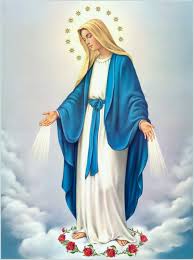
The Dicastery for the Doctrine of the Faith (DDF) released the document Mater Populi Fidelis, which was approved by Pope Leo XIV on October 7.
“When an expression requires many, repeated explanations to prevent it from straying from a correct meaning,” the note stated, “it does not serve the faith of the People of God and becomes unhelpful.”
It stated that the title “Co-Redemptrix” risks “eclipsing the exclusive role of Jesus Christ” and “would not be a true honor to his Mother.”
The note also discouraged the widespread title “Mediatrix of All Graces,” suggesting that it lacks solid grounding in Revelation and carries “limits that do not favor a correct understanding of Mary’s unique place.”
It’s funny. Whenever anything comes out of the Vatican I kinda’ brace for impact. I cringe inside. Uh-oh. What’s coming down the pike?
But this actually seems not offensive. It’s funny. I so often read things and hold my breath. It’s nice to read something and just say, “Yeah, I guess that makes sense.”
But while we’re defining things, can we get an exact definition on other terms such as “synodality.”
Can we get a real definition of this, one that accurately defines what’s been going on for the past half decade we’ve been synodalizing? Can we string together a logical definition about pretending to poll priests and bishops and then completely ignoring them and pushing your own agenda to transform the Church?
Hmmmm….
November 4, 2025 at 1:52 pm
Thankfully the pope did not sign this fallible doctrinal note “in forma specifica.” It offers counsel and prudential judgments, but is of relatively low authority in terms of the Catholic obligation of assent.
The document correctly explains the doctrine of Mary Co-Redemptrix, and then says it is inappropriate to call her what she is. Typical self-refuting gobble garble from Cardinal Pervy Smoochy-Face.
Fernandez has GOT to go. Pope Leo has done himself no favours, nor does this doctrinal note honour Our Lady.
On the Feast of his patron St. Charles Borromeo, in 1984 Pope John Paul II gave an Angelus address, saying:
“To Our Lady — the Co-Redemptrix — St. Charles turned with singularly revealing accents. Commenting on the loss of the twelve-year-old Jesus in the Temple, he reconstructed the interior dialogue that could have run between the Mother and the Son, and he added, ‘You will endure much greater sorrows, O blessed Mother, and you will continue to live; but life will be for you a thousand times more bitter than death. You will see your innocent Son handed over into the hands of sinners … You will see him brutally crucified between thieves; you will see his holy side pierced by the cruel thrust of a lance; finally, you will see the blood that you gave him spilling. And nevertheless you will not be able to die!'” (From the homily delivered in the Cathedral of Milan the Sunday after the Epiphany, 1584).
Our Lady Co-Redemptrix with her Son, pray for us, and for the pope and his collaborators.
St. Charles Borromeo, pray for us on this your feast day.
November 4, 2025 at 2:51 pm
I suspect St Louis-Marie de Montfort was not consulted.
November 12, 2025 at 12:06 pm
A lot of the trouble I think comes from the translation from the Latin to English. Latin is more precise in terms of defining what a word means and it’s nuances. For example there are three terms in Latin that define the different veneration, worship and adoration for God, saints and Blessed Mother, but when its translated to English or other languages where there isn’t another word that differentiates:
Latria (cultus latriae) → worship due to God alone
Dulia (cultus duliae) → veneration due to saints
Hyperdulia (cultus hyperduliae) → special veneration due to the Blessed Virgin Mary
Thus:
Adoratio = Latria (to God)
Veneratio = Dulia / Hyperdulia (to saints / Mary)
Cultus = general term encompassing both.
This is where protestants get bent out of shape because English doesn’t differentiates as Latin does so as far as they are concern we worship God, Mary and the Saints.